
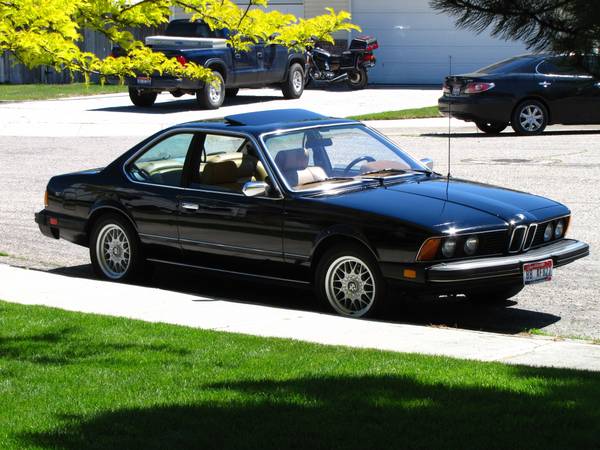
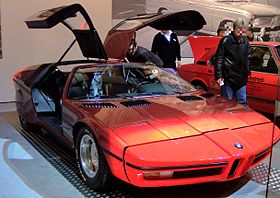
To be honest, this car is in Idaho Falls, but I’m getting ahead of myself. I love the BMW E24 6-series – always have. I first became acquainted with them when my Dad pointed them out to me, waxing about how he didn’t care for the taillight design. It’s the little things, right? Decades later I had the chance to meet and interview the car’s original designer, Frenchman Paul Bracq, who walked me through his thought processes: a modern replacement for the pretty E9 coupe, containing many of the E9’s design elements but sleeker and hearkening to Bracq’s own 1972 BMW Turbo concept car – especially in the hood and grille. In any case, the E24 is a car I’ve long lusted for, in all versions, but have never had the stars align just right to buy. This U.S. spec car appears clean, and represents a lot of car for the low $2,500 asking price (which can be even lower if you don’t want the wheels!).
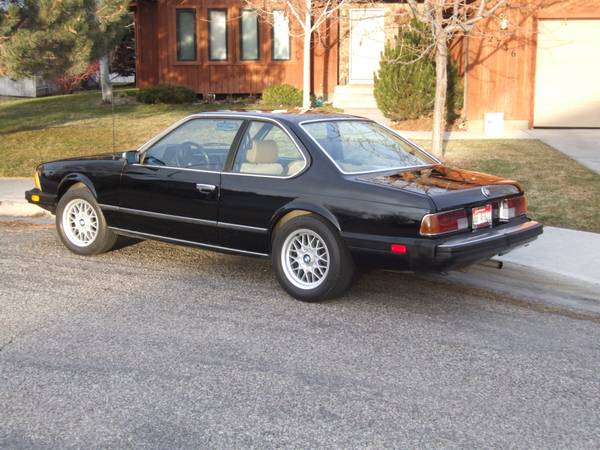
So just what is it about the E24 that makes it appeal? To me, it’s a combination of the big greenhouse with slim pillars, the exaggerated ship’s prow nose, the driver-oriented dash and console, and the delicious venerable BMW M30 “big six” motor mated to a five-speed manual transmission. Don’t get me wrong: this is a big, heavy car but it pulls like, well, a big six Bimmer. These days, the design looks a little old, especially in the pre-facelift/no spoiler version, but there is a trade-off. At the same time the exterior was freshened, BMW also updated the car’s E12 5-series based chassis to the new E28’s. At the time it was lauded as a great move, improving handling and road manners. The problem, however, is that the sensitive, bushing-riddled E28 chassis is not the easiest to keep happy especially compared with the simpler E12 version. As one who hates shimmies and shakes (and worked tirelessly to chase these demons out of an E28), I’ll take the earlier version, thankyouverymuch.
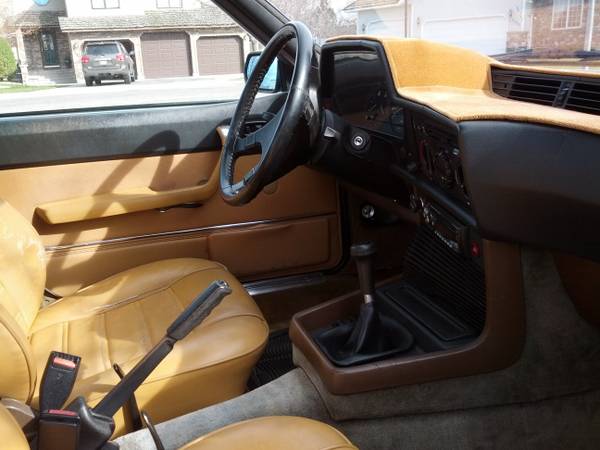
The 6er’s interior does show its age somewhat in general design, but then just about anything these days without nav, satellite radio, and digital automatic climate control looks old – or as I prefer to think of it: Classic. The dash is tall, and the gauges large and legible. A lot of these tended to crack, and this one appears no different. That said, how hard could it be to find a good used one with the interwebs at your fingertips? Putting it in may be a challenge, but Jonathan here at TTS would surely help. At least I know he’s done the job in E3s and E12s. Could this really be much different? The front seats appear in reasonably good condition, and hopefully the sculpted rears are as well. Since the seller doesn’t reference the AC system, chances are it doesn’t work. It’s a marginal system at best, so that may not be the end of the world. Besides, it appears that the sunroof and windows open.
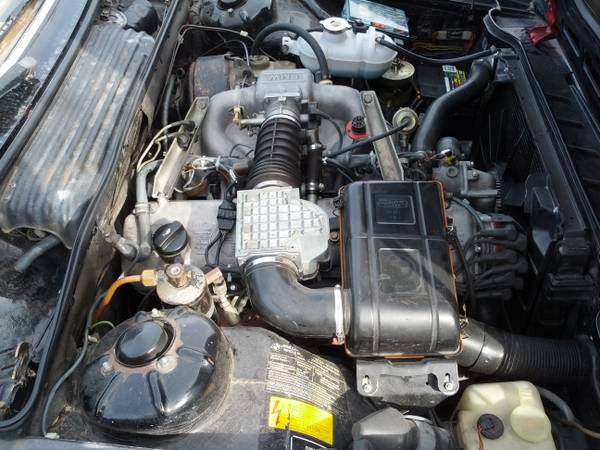
As mentioned previously, we are fans of BMW’s M30 inline-six cylinder motor. BMW used the motor, in varying forms, for about 25 years, culminating in the E32 and E34 7- and 5-series. Many enthusiasts have swapped later motors into earlier cars, and it isn’t rocket science once you have the general hang of it and know what you need to make things fit and work together. This car, thankfully, already has the reliable Bosch Motronic fuel injection system as opposed to carbs or the earlier and less-friendly L-Jetronic system, so driveability should be good. The manual transmissions in these cars are quite robust, and even though the throws are long by modern standards, they are positive and easy to use – not at all vague like many of their German contemporaries.
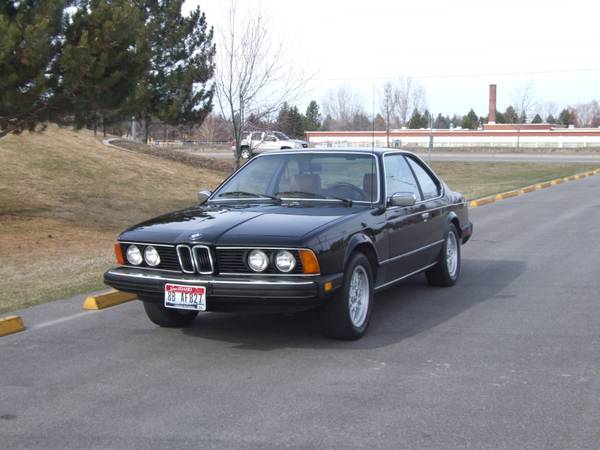
Svelte, classic, affordable coupes are becoming fewer and farther between, and as years pass will likely creep up in value. These were not the ultimate 6ers, that was a role left to the 286hp M6. But these mid-series 633s have the earlier chassis combined with the later motor, and that makes them interesting as drivers. Parts are mostly available, so a driving restoration is not out of the question. However, at this cars low entry price we’d be tempted to just drive it and enjoy it.


 Totally That Stupid
Leave a comment