
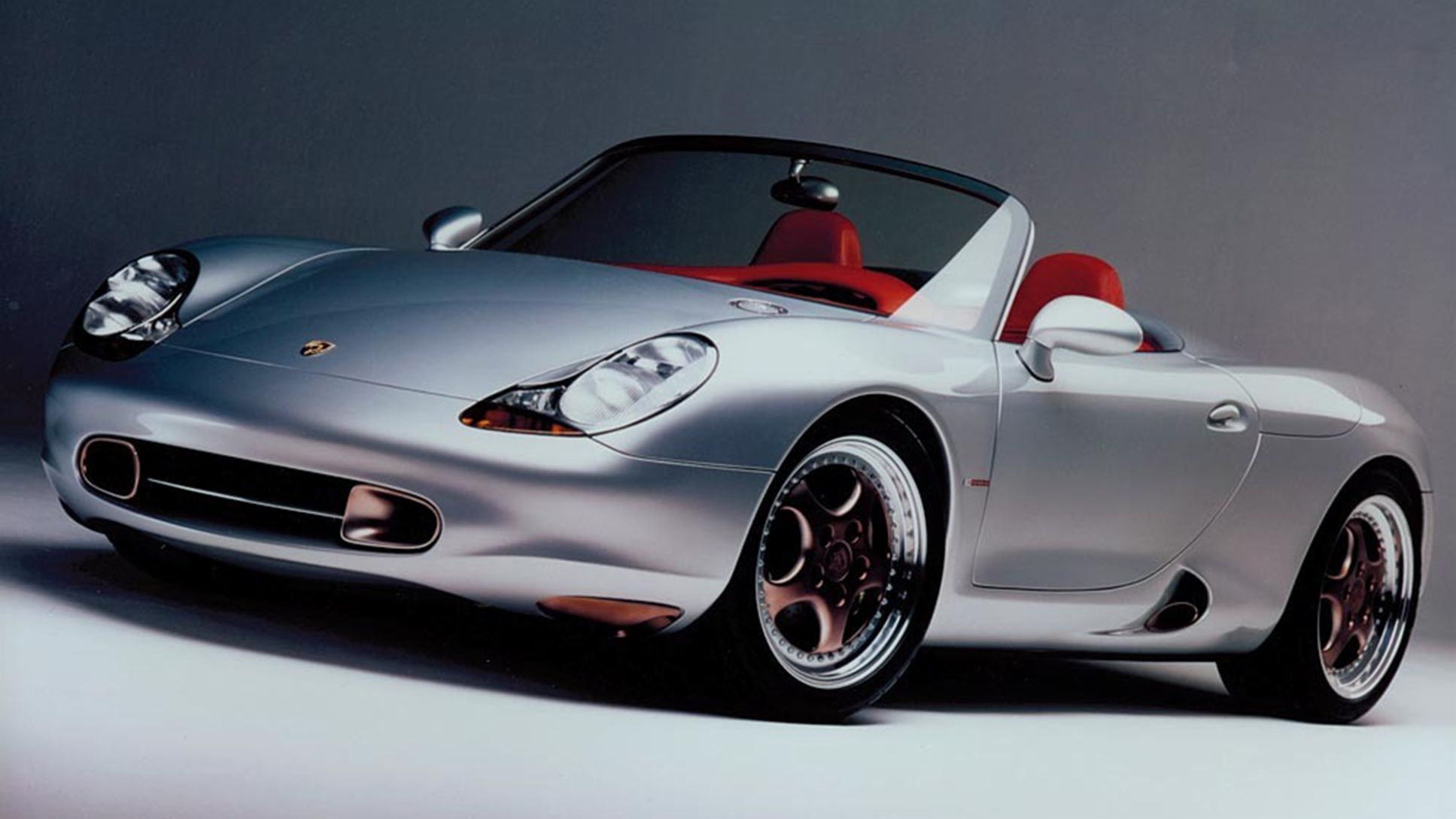
When Porsche’s Boxster show car hit the stands in 1993, the storied marque was gasping for air. With the excesses of the 1980s in the rear view mirror, the company was facing trouble on a number of fronts, inefficiently building aging, expensive cars on top of a down economy and unfavorable exchange rates. Enthusiasts still loved the nearly 30 year old 911, but sales did not reflect that enthusiasm. Meanwhile the newer (only about 15 year-old) front-engined, watercooled 924, 944, and 928 models also struggled to find new owners. Having sold 30,471 cars in North America in 1986, the figure for 1993 was just 3,713 – or barely more than 10% of the 1986 number. With the U.S. and Canada as arguably the brand’s most important market, this trend was obviously not sustainable. Enter the Boxster.

So in the midst of all of this corporate turmoil, covered in a veil of “what will happen to the 911?”, the design folks at Porsche came up with this: a sleek, mid-engined throwback to the 550 Spyder, complete with bulging rear quarters and space for you and your favorite companion – and nothing more. I remember the show car like it was yesterday – the silver on terra cotta red, side intakes, complementary-colored wheels and exterior trim, and even these cool interior vents with individual fans in them. Any German car enthusiast in their right mind wanted one – myself included.

Frankly, the two-seat roadster landscape in the U.S. was pretty dismal by 1993 when the Boxster concept was released. The Mazda MX-5 Miata was pretty much the only game in town, as Alfa was hanging-up the keys for the long-toothed Spider, the Lotus Elan M100 and Mercury Capri hadn’t really excited a lot of folks with their front wheel drive layouts, and, well, there really wasn’t much else – especially for the average middle-class enthusiast. Interestingly, at the same time Porsche was getting the Boxster ready for primetime, both Mercedes-Benz and BMW were working on two-seat roadsters of their own: the SLK and Z3, respectively. However, both of these employed a traditional front-engine rear-drive layout, and both were initially offered with four-cylinder engines, while the Boxster left the gate with a mid-mounted flat-6. Of the three, the Boxster could most definitely be considered the most “exotic”.

Fast-forward to 1997, and a moderately toned-down Boxster hit Porsche showrooms. The basic shape made the transition, but some of the more extravagant touches that adorned the show car made way for production practicalities. Of note, the dashboard design was toned down substantially, and the side intakes were raised – likely to avoid sucking in water when driving through a small puddle. The rear haunches made the transition, however, as did the low-slung, cosseting feel of the interior. A little dated by today’s standards, but still attractive nonetheless.

Unfortunately, over time the Boxster developed a reputation of specifically NOT being a 911, rather being more of a secretary’s/hairdresser’s car. This was no doubt thanks in no small part to it being showcased in the film Legally Blonde. In reality, it isn’t a 911, and nor was it intended to be. The Boxster was purposely positioned as entry-level, while the 911 remained more aspirational. That said, on release of the contemporary 996-chassis 911, there were more similarities than differences. The Boxster shared the 911’s sheetmetal forward of the A-pillar, interior design (including essentially identical dashboard save for the number of gauges and some small details like vent openings), and engine architecture. Frankly, the chief differences were the location and displacement of the engine (2.5 liters for the Boxster versus 3.4 for the 911), the number of seats, and – at least per my experience – the Boxster was better-balanced and you could feel it in the handling.

Unfortunately, because they were “entry level” cars at a reasonable price point when new, over the years first (986) generation Boxsters have fallen somewhat into the unloved/daily driver/ran-hard-and-put-away-wet category, and there are now a LOT of dogs out there. Still, many owners bought them as second, third, or even fourth cars and used . All that said, in the current environment where everything even remotely collectible in automotive circles seems to be overpriced, Boxsters still represent a hell of a value. But – their stock is starting to rise.

I’ve owned two Boxsters myself – both 2000s and both in Speed Yellow. One was a base model – with the upgraded (from 2.5 liters) 2.7 – and the other was an “S” model with the more powerful 3.2 liter. Both were little parties on wheels, but I have to admit that I preferred wringing-out the smaller motor to 9/10s as opposed to not really being able to use the bigger motor to its full extent on my favorite backroads. The 3.2 is notably faster, but the 2.7 was certainly no slouch. In fact, the only thing I liked better about the S was its heated seats – but those could be had on a base Boxster. You just have to look around.
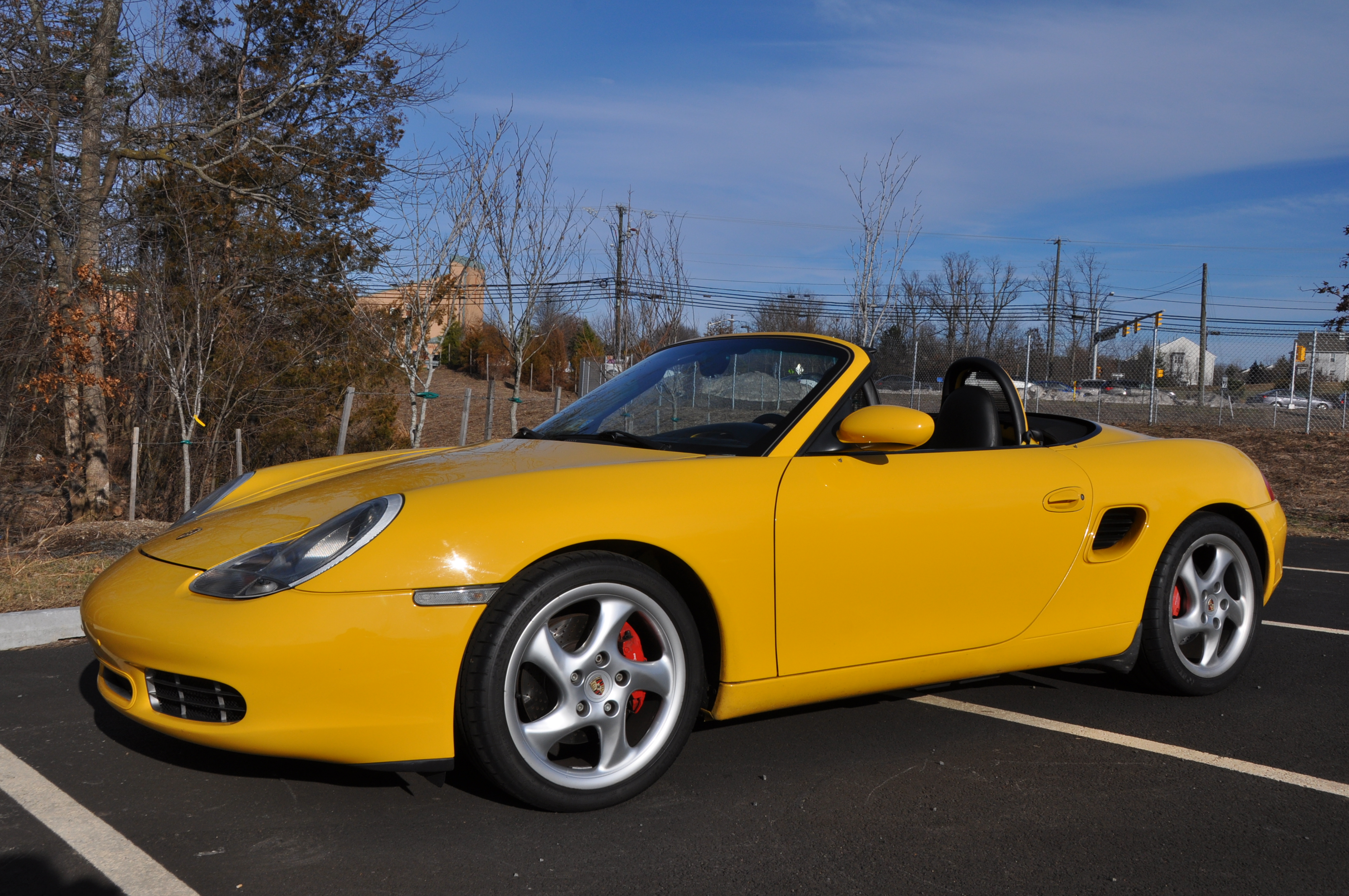
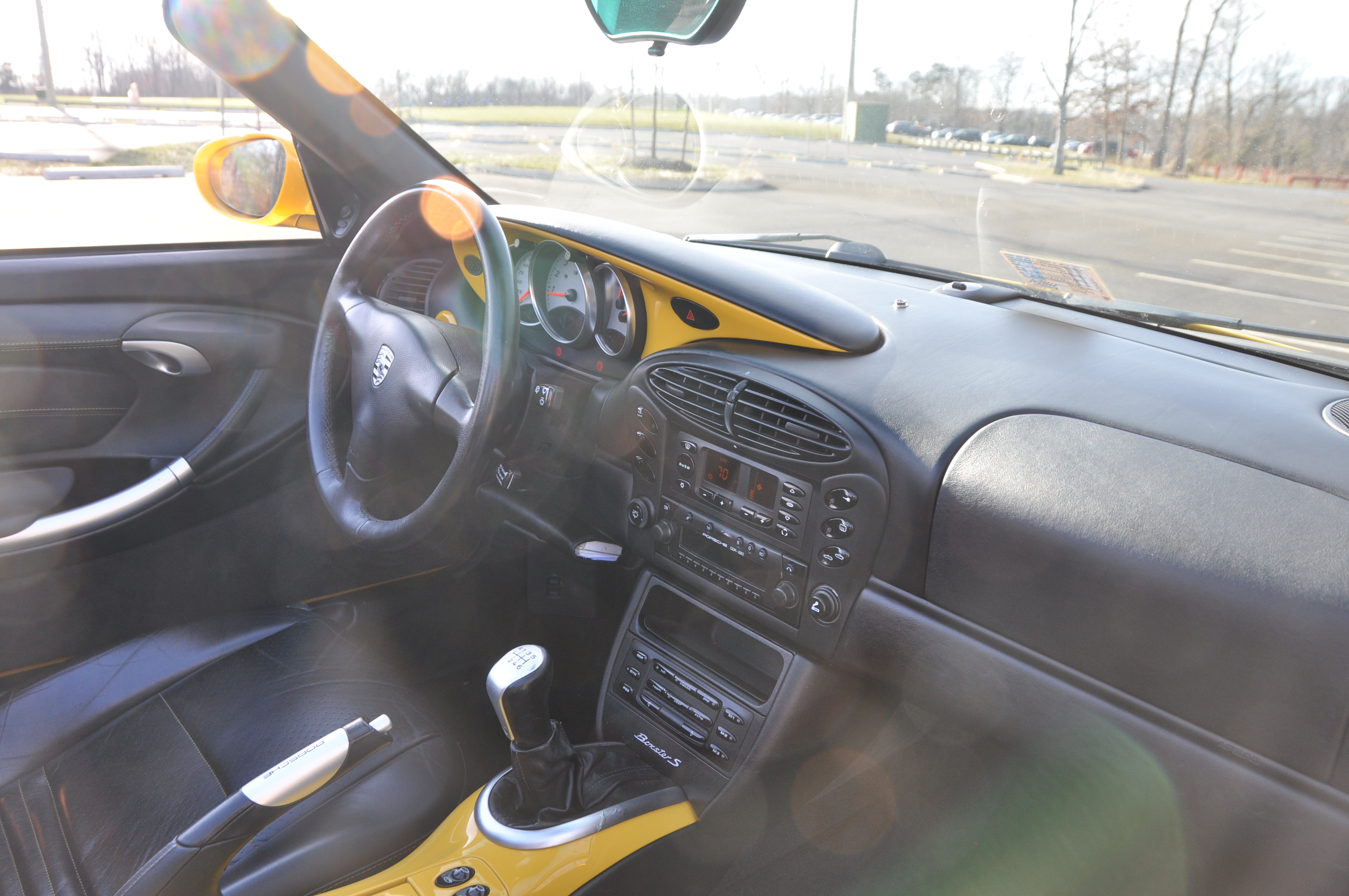
On the outside, as you can see here, there is little to distinguish the S from the base car. In fact, between my two it came down to the S model’s third front intake in the middle and my car’s +1 wheels, body colored roll hoops, and body colored rear impact thingies. My base car had a simple black interior, while the S had yellow accoutrements throughout which, while definitely attention-grabbing, were a tad on the tacky side for my taste.
So like all things automotive in my life, I had my Boxster fun and moved on, but admittedly kind-of regret selling that first base car. Now I spend far too much time surfing classified ads for everything, but lately the Boxster has been a recurring theme. I’d gladly have another Speed Yellow, but I also like early 2.5 cars in the concept-esque silver on red, and even more I like the 2004-only 550 Spyder edition in Porsche GT Silver with optional brown leather interior.
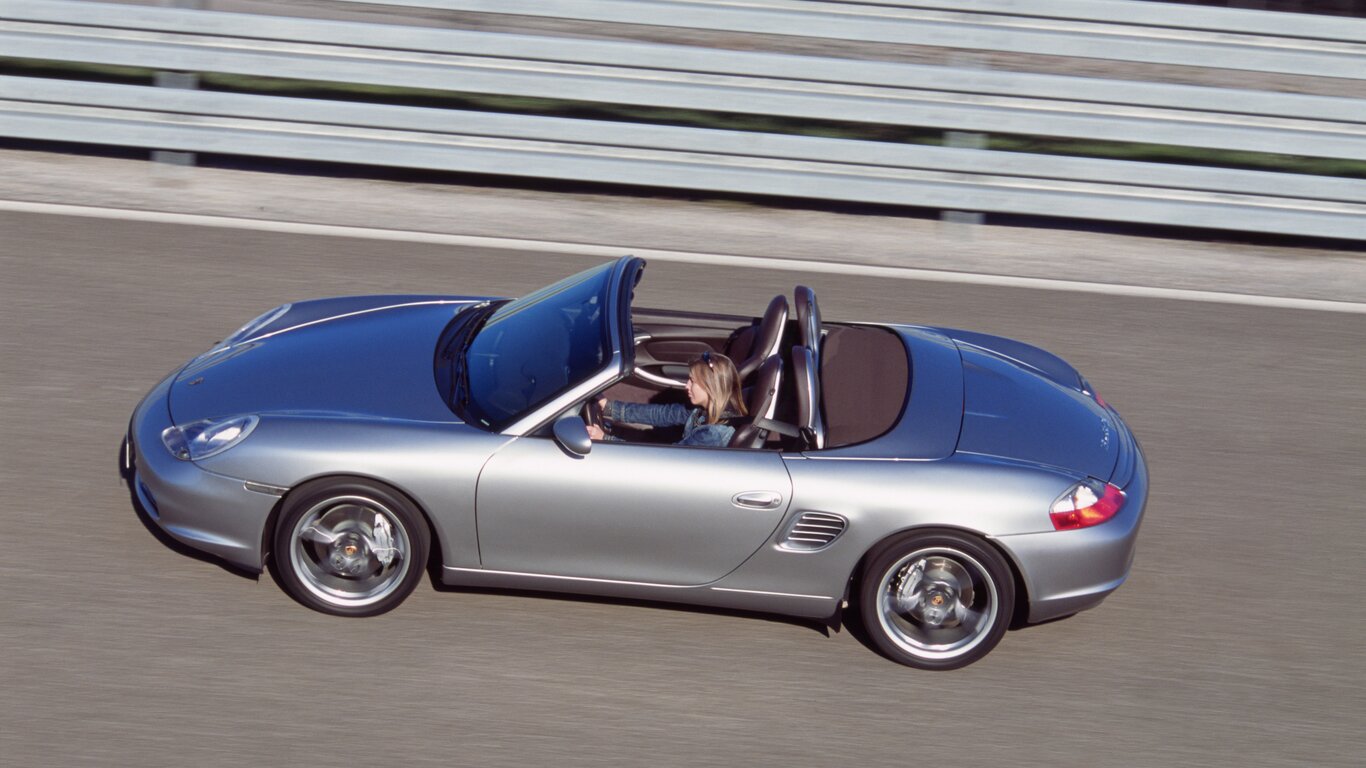
The 550 Spyder had a small (6hp!) power increase over the standard Boxster S, but the colors were unique to the model. I keep telling myself that the fleet is full at the moment, but every time I start thinking about these cars I ponder whether I couldn’t make room (and find the money) for just one more. THIS clean 550 Spyder in Spokane, Washington for $14,995 could be a contender, but alas it has the dark grey interior instead of the brown. And I have a weird thing for brown leather. You should definitely buy it. It will be worth more one of these days, probably sooner than you think.

If you like to wrench on your cars a lot without much drama, the Boxster (or just about any post-1995 car) probably isn’t your first choice. I do like the ability to at least interact with the motor, and the Boxster lets you – but you have to raise the convertible top halfway, slide the seats forward, and remove an access panel. At that point you will see the about 1/4 of the outside of the engine. More often, the average Boxster owner will interact with the little pocket in the corner of the rear trunk (not to be confused with the “frunk” pictured below) that contains access to a dipstick, and oil/water fills. You can also check your brake and washer fluids up front, so there’s that, too.
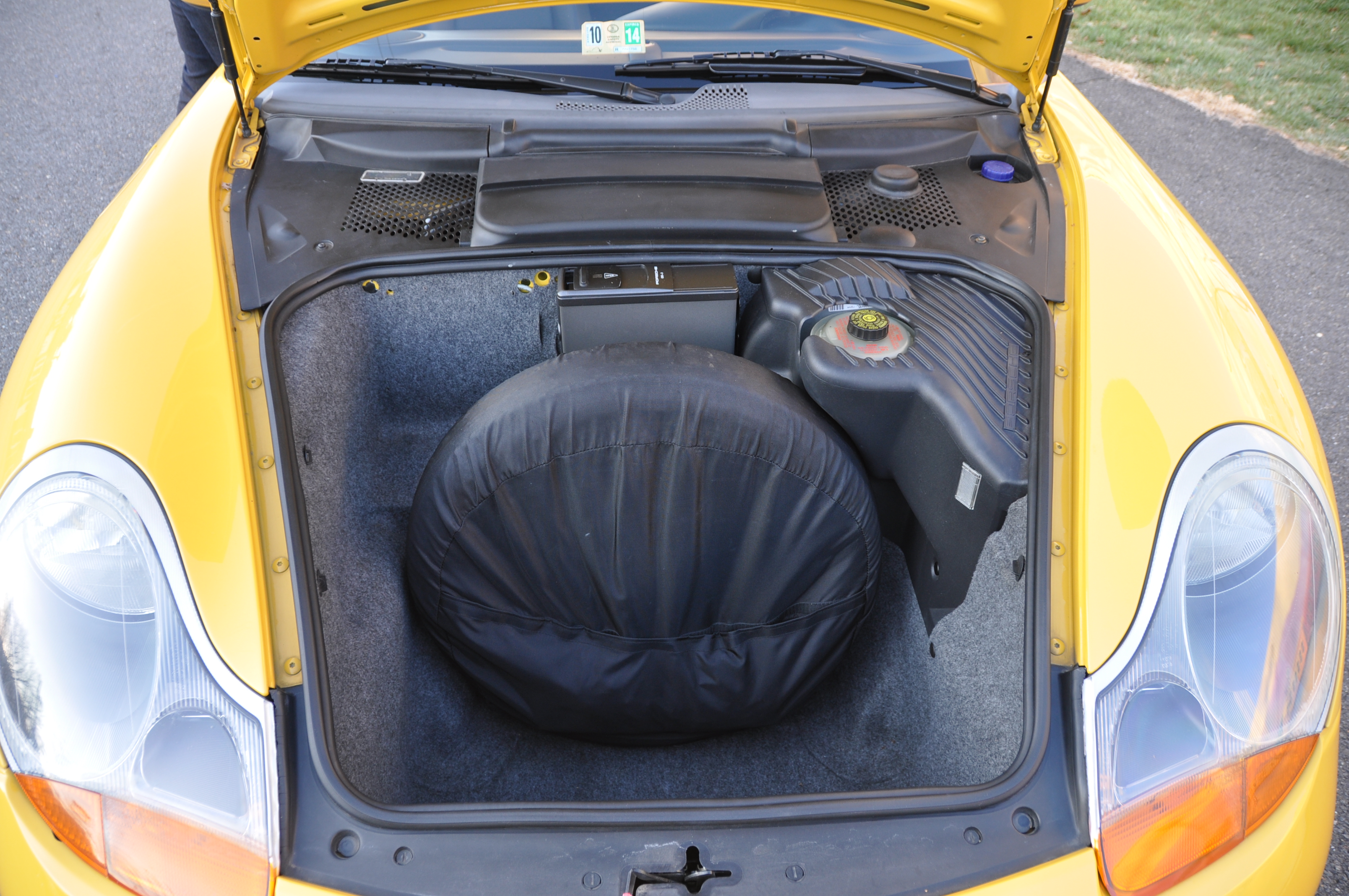
If you’re considering a Boxster, the IMS (intermediate shaft) bearing issue will undoubtedly raise its head. Do yourself a favor and read a non-biased article that details the issue from someone without a vested interest in selling you a solution (like THIS ONE). Neither of my MY2000 (dual-row bearing) cars had the bearing replaced, both right around 100K miles, and neither showed any signs of impending failure. Could it happen? Sure. The bad press always meant that was just lingering in the back of my mind for the duration of my ownership, but it probably didn’t need to be. A bearing replacement is definitely insurance against it, but it may be just fine as is. Newer cars, particularly those with lower miles that have not had the bearing replaced are probably in the most imminent danger. Note the seller of the 550 Spyder edition above has priced his car including an IMS “Credit”. Figure in the neighborhood of $2-$3K for replacement, do the rear main seal at the same time. But DO NOT let IMS put you off of Boxsters or a particular car. If anything, use it as price leverage.

If you like the early cars, an honest 1999 in the original Boxster livery (pictured above) can be had with 74,000 miles can be had for just $10,500 2023 dollars. But maybe you want a 2003-2004 with a glass rear window and a glove compartment (no, earlier cars did not come with either) with barely more than delivery miles in a bold color? Try this Speed Yellow with 16K miles for $26,800, which is pretty much the high end of Boxsters save for something that is basically new in the wrapper. On the other end of the spectrum, you can still find a running, driving Boxster with maybe some miles and some needs here and there as cheap as $3,950 like this one in Myrtle Beach, SC – but be prepared to spend a little bit of money or just drive it ’til it drops!

My contentions are these: 1) there is a Boxster to fit any budget, so long as you have a fin car budget; 2) the 986, as the original of the series, is the most raw and pure, and even then is an absolute joy on the road and arguably a better handler than its big brother, although some argue that “true” enthusiasts prefer the challenge of driving the 911; 3) good Boxsters WILL go up in value. Like I said earlier, they’ve already stared to edge that way. The best already command big(ish) dollars, and the good/very good will follow suit in short order. With pretty basic care you certainly shouldn’t lose money on one! Get while the getting is good. Trust me.
 Totally That Stupid
Leave a comment